

Finding the ideal thread count for your duvet cover isn’t just about picking the highest number on the package. True comfort depends more on fiber quality, weave, and breathability than a big marketing number. Aim for a “sweet spot” between 200 and 400 to ensure your bedding stays soft, durable, and perfectly crisp for years of restful sleep.
When you walk into a home goods store or scroll through online bedding shops in 2026, you are hit with a wave of numbers. You see 400, 600, 800, and even 1,000 thread counts displayed proudly on packaging. It is easy to assume that higher means better. We are wired to think that a bigger number indicates a higher quality product.
But when it comes to your duvet cover, the reality is much more nuanced and surprisingly simple. If you have ever bought an expensive 1,000-thread-count sheet set only to find it feeling heavy, stiff, or prone to pilling after a few washes, you are not alone. Many shoppers fall into the trap of believing that thread count is the ultimate marker of luxury.
In this guide, we are going to peel back the layers of the textile industry to answer the big question: what is a good thread count for a duvet cover? By the end of this, you will be able to shop with confidence, knowing exactly what to look for to ensure your bed feels like a sanctuary every single night.
Key Takeaways
- Quality Over Quantity: A lower thread count made from long-staple cotton is significantly softer and more durable than a high thread count made from low-quality, short-staple fibers.
- The Sweet Spot: For most sleepers, a thread count between 200 and 400 provides the perfect balance of breathability and tactile softness.
- Beware of Marketing Traps: Numbers above 600 are often misleading, achieved by twisting thin, weak threads together to inflate the count.
- Fiber Matters Most: Prioritize material types like Egyptian, Pima, or Supima cotton, as well as high-quality linen or bamboo, over the numeric thread count.
- Weave is Everything: A percale weave offers a cool, crisp feel, while a sateen weave provides a silky, smooth finish, regardless of the thread count.
- Maintenance and Aging: Quality duvet covers improve with age; choosing the right thread count ensures your cover handles repeated washing without pilling or thinning.
Understanding the Basics of Thread Count
At its simplest, thread count refers to the number of horizontal and vertical threads woven into one square inch of fabric. To calculate it, manufacturers count the warp (lengthwise) and weft (widthwise) threads. For example, if you have 100 vertical threads and 100 horizontal threads, you have a thread count of 200.
In theory, a higher number should mean a tighter weave, creating a smoother and stronger fabric. However, the textile industry has changed significantly over the last decade. As consumer demand for “luxury” numbers grew, manufacturers found creative ways to inflate these figures.
They began using multi-ply threads taking two or three very thin, fragile strands of fiber and twisting them into one thread. They then count each of those individual strands to boost the “thread count” on the label.
The Myth of High Numbers
When you see a duvet cover with a 1,000 thread count, you should actually be skeptical. To fit that many threads into a single square inch, the individual fibers must be incredibly thin. Usually, these fibers are of a lower quality, making them prone to snapping or creating a heavy, thick fabric that lacks breathability. Instead of a soft, airy cover, you end up with something that feels like a stiff, synthetic sheet.
By 2026 standards, the sweet spot for a high-quality duvet cover remains between 200 and 400. Within this range, the threads are thick enough to be durable, and the weave is balanced enough to allow airflow. Airflow is vital for a duvet cover, as it prevents you from waking up overheated in the middle of the night.
Why Fiber Quality Trumps Thread Count?
If you take away only one thing from this article, let it be this: fiber quality is vastly more important than the number printed on the package. A 200-thread-count cover made from long-staple Egyptian cotton will feel infinitely softer and last longer than a 600-thread-count cover made from short-staple, lower-grade cotton.
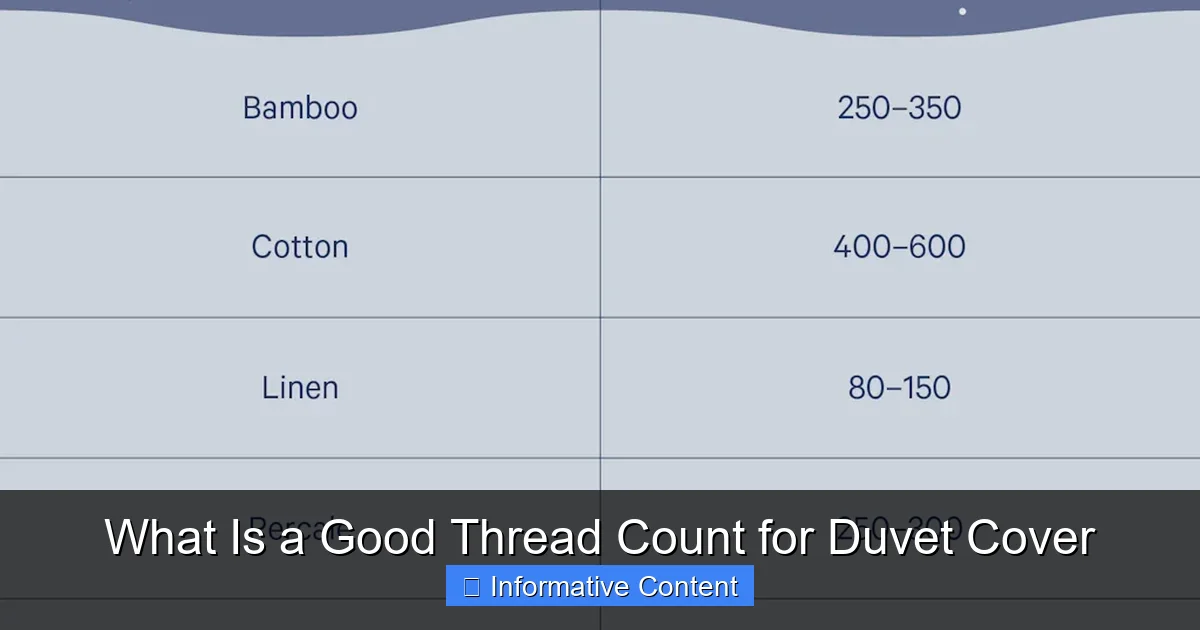
Visual guide about What Is a Good Thread Count for Duvet Cover
Image source: cdn.shopify.com
What are Long-Staple Fibers?
The “staple” refers to the length of the individual cotton fiber. Short-staple cotton has many ends that stick out of the weave, which can lead to pilling and a rougher texture over time. Long-staple cotton (like Pima, Supima, or Egyptian) has longer, smoother fibers.
These fibers can be spun into finer, stronger yarns, requiring fewer ends to create a smooth surface. This creates a fabric that is inherently soft, strong, and resistant to pilling, regardless of the thread count.
Natural Materials to Consider
While cotton is the gold standard for many, other materials have different “good” thread count benchmarks. Linen, for instance, is measured by weight rather than thread count because the fibers are naturally much thicker.
A high-quality linen duvet cover will feel textured and rustic, getting softer with every single wash. Bamboo and Tencel covers also feel incredibly silky, often providing a cooling sensation that cotton cannot replicate. When shopping, prioritize the material type look for organic options or certified materials before you even look at the thread count.
The Role of Weave in Your Comfort
Once you understand fiber quality, the next step in finding a good thread count for a duvet cover is considering the weave. The way the threads are interlaced determines how the fabric feels against your skin. You can have two identical thread counts, but if one is a percale weave and the other is sateen, they will feel completely different.
Percale Weave
Percale is a simple “one-over, one-under” weave. It results in a matte finish and a crisp, clean feel. If you enjoy the sensation of climbing into a fresh hotel bed, percale is your best choice. It is naturally breathable, making it a perfect fit for a 200 to 300 thread count. Because it is a looser, more open weave, it stays cool even in the heat of summer.
Sateen Weave
Sateen is a “three-over, one-under” weave. This exposes more of the thread surface, creating a fabric that is smooth, lustrous, and slightly heavier than percale. A sateen duvet cover often feels more like silk or satin. If you prefer a cozy, heavier feel, sateen is excellent, but because of the weave density, it might hold onto more heat than a percale equivalent.
What is a Good Thread Count for Your Lifestyle?
Your ideal duvet cover depends heavily on how you sleep and how much maintenance you are willing to do. In 2026, we see a shift toward “functional luxury” items that perform well without requiring constant care. Here is how to choose based on your personality:
For the Hot Sleeper
If you wake up sweating, aim for a 200-300 thread count in a percale weave. Avoid anything advertised as “high thread count,” as these are often too dense to let heat escape. A lightweight linen or a cotton-percale blend will keep you feeling refreshed all night long.
For the Luxury Seeker
If you love the feeling of hotel-style luxury, look for a 300-400 thread count in a long-staple sateen weave. This provides that buttery-smooth finish that feels elegant against your skin. It is the perfect middle ground between durability and softness.
For the Practical Homeowner
If you have kids, pets, or just want a cover that survives frequent washing, go for a 250-300 thread count in a high-quality cotton. This range is sturdy enough to withstand the laundry cycle while staying comfortable. Avoid very high thread counts here, as the delicate threads are more likely to snag on pet claws or household items.
Common Marketing Traps and How to Spot Them
As you shop for your duvet cover in 2026, you will likely encounter labels that boast “1,000 thread count” for a suspiciously low price. This is a red flag. If a high-thread-count product is cheap, the manufacturer has almost certainly used multi-ply threads or low-grade, short-staple cotton.
Checking the Label
Legitimate luxury brands are often transparent about their construction. Look for keywords like “Single-Ply” on the label. This means one single thread was used in the weave, which is the hallmark of genuine quality.
If a brand doesn’t specify if it is single-ply or multi-ply, it is usually safe to assume the latter. Additionally, check for certifications like OEKO-TEX, which ensures the fabric is free from harmful chemicals, which is often a better indicator of quality than the number on the package.
Conclusion: Choosing Your Perfect Duvet Cover
When you boil it all down, the question of what is a good thread count for a duvet cover is really about finding what feels best to you. Forget the marketing hype of 800 or 1,000 counts. For the vast majority of people, the sweet spot of 200 to 400 represents the pinnacle of comfort, breathability, and long-lasting quality.
Invest in long-staple cotton or high-quality linens, choose a weave that matches your preference for crispness or smoothness, and don’t be distracted by the highest number on the shelf. By focusing on the quality of the fibers rather than the quantity of the threads, you will choose a duvet cover that transforms your bed into a place where you truly look forward to resting every single night. Happy sleeping!
Frequently Asked Questions
Does a higher thread count mean it will be warmer?
Not necessarily, but it can feel heavier and less breathable. High thread counts often mean a denser weave, which traps heat, whereas lower counts with quality fibers allow for better airflow.
Is a 300 thread count good for a duvet cover?
Yes, 300 is widely considered the ideal “sweet spot.” It offers a perfect balance of softness, durability, and breathability for most climates and sleep styles.
Why do some expensive sheets have lower thread counts?
Premium brands prioritize the quality of the fiber, such as long-staple Egyptian cotton, which is soft and strong without needing a high number of threads per inch. They focus on the longevity and feel of the material rather than inflated numbers.
How do I know if a thread count is fake?
If the thread count is very high (e.g., 600+) but the price is low, it is likely using multi-ply, low-quality threads to artificially increase the count. Always look for “single-ply” labels as a mark of true quality.
Does a duvet cover get softer with more thread counts?
Not always; it often gets heavier or stiffer if the fibers are poor quality. The softness of a cover is determined more by the quality of the raw fiber and the finish of the fabric than by the thread count itself.
Should I prioritize thread count or material?
Always prioritize the material. A 200-thread-count linen or Supima cotton cover will almost always outperform a 600-thread-count synthetic or low-grade cotton blend in terms of comfort and lifespan.