

A heavy mirror on a plaster wall should be mounted to wall studs whenever possible. If the mirror cannot align with studs, use plaster-compatible anchors or toggles rated for the mirror’s full load, and distribute the weight with a French cleat, mirror rail, or backing board. Plan for at least two fasteners on studs or multiple toggles. A mirror creates sideways “pry” force when someone brushes past it, so one fastener is rarely enough.
Key Takeaways
- Start with stud location. Studs provide the most reliable support for a heavy mirror on plaster.
- Match anchors to the load. Choose anchors rated for heavy loads and confirmed as compatible with plaster.
- Use a mounting rail. A French cleat or mirror rail spreads the weight and reduces stress on individual fasteners.
- Plan for shear and pull-out. Mirror mounts must resist downward load, sideways movement, and force pulling away from the wall.
- Check for hazards. Scan for wiring and plumbing before drilling, and avoid locations where you cannot confirm the wall structure.
- Test before letting go. Use temporary support during installation, then perform a gentle shake and side-to-side test.
Before You Drill Into a Plaster Wall
First identify what sits behind the plaster: a wood stud, lath and plaster, or a hollow cavity. Stud mounting is usually the safest option because plaster can crumble or separate from lath when stressed. If the mirror’s bracket holes line up with studs, use those locations rather than forcing an anchor into the plaster.
Gather the mirror’s weight, dimensions, stud locations, and the hardware you plan to use. That hardware might be a French cleat, mirror rail, cleat, or eye hooks. If you do not know the mirror’s weight, measure its thickness and approximate its area, then create a conservative weight estimate.
How Plaster Changes the Mounting Method
Plaster handles compression well but is vulnerable to tension and pull-out. A heavy mirror makes fasteners work in several directions at once: downward shear, outward pull, and sideways movement. Those forces can crack the plaster or enlarge the hole around an anchor.
The mount should transfer the load into framing or into an anchor that mechanically locks behind the plaster and lath. Where studs are unavailable, use anchors or toggles that grip behind the wall rather than relying on friction in the plaster alone.
Load distribution matters just as much as anchor strength. A single center fastener or bottom screw becomes a pivot point when the mirror moves. Multiple fasteners reduce rotation at the wall.
Step-by-Step: Hang a Heavy Mirror on Plaster
- Find the studs. Use a stud finder, then confirm the location by knocking for solid taps or drilling a tiny pilot hole in a safe test area.
- Measure or estimate the mirror’s weight. Use the listed weight when available. Otherwise, calculate the approximate glass area and create a conservative estimate.
- Choose the mounting style. If you can reach studs, use a French cleat or rail with screws driven into the studs. If you cannot, plan an anchor pattern rated for the mirror’s load.
- Mark the height and level. Measure from the floor, then draw a level line for the cleat or rail where the mirror will sit.
- Drill and install the hardware carefully. Pilot-drill first, keep the drill straight, and center each hole on the mark.
- Support the mirror while connecting it. Use a second person or a removable stand. Once all mounting points align, secure and tighten the hardware.
- Test the installation. Apply gentle push, pull, and side-to-side pressure. If the mount flexes or the plaster cracks, stop and correct the installation.
Estimate Mirror Weight in 2 Minutes
If the product specification does not list the mirror’s weight, start with its glass area:
- Mirror area in square feet = `(width in inches / 12) × (height in inches / 12)`
Glass weight depends on thickness, backing, frame, and hardware. Treat an unknown mirror as heavier than you expect and leave a safety margin in your mounting plan. Do not rely on a precise density calculation unless you know the glass thickness and frame construction.
For a practical estimate, multiply the mirror’s area by a conservative budget weight per square foot that matches its typical thickness. If you do not know the thickness, assume a heavier-than-average mirror and choose more conservative hardware.
Check the packaging or product page for the listed “net weight” whenever possible. You can weigh a smaller mirror on a bathroom scale if you can do so safely. Large mirrors are usually too awkward to weigh this way.
Example Anchor Plan for a 60 lb Mirror
A 60 lb mirror needs a distributed mounting system rather than one anchor.
- If you can reach studs: Split the load across at least two stud connections. Depending on the cleat hardware, that may mean 2 cleat screws per stud side.
- If you cannot reach studs: Use multiple properly rated anchors and a rail or cleat that limits rocking. A single anchor is suitable for small frames, not heavy mirrors.
Anchor ratings depend on the specific anchor model, installation method, and plaster thickness. Use the manufacturer’s listed load rating for your exact hardware. Choose anchors rated for equal to or greater than the total load, add a safety margin, and distribute the weight across multiple fasteners.
Mounting Rails, French Cleats, and Backing Boards
A mounting rail or French cleat changes the connection from one point pulling on the plaster to a wider mechanical interface that reduces pull-out stress and helps prevent sagging.
A French cleat uses one angled piece on the wall and a matching angled piece on the mirror. Gravity seats the mirror onto the wall cleat, while the interlocking shape limits upward pull-out and sideways movement from incidental contact.
Use a rigid spacer when the mirror has a flat back but does not sit evenly against the mount. Irregular backing boards and thick frames can twist the mirror and overload one side of the hardware.
A backing board or thin plywood frame can also spread force across the mounting points, especially when the mirror has a fragile or uneven back. Make sure the added support is securely attached to the mirror frame or backing and does not create pressure points against the glass.

Helpful pick
150Pcs Heavy Duty Picture Hangers Kit, Supports 10-100 lbs – Premium Wall Hanging Hooks with Nails for Drywall & Wood, Ideal for Pictures, Clocks, Mirrors, and Home Decor
This heavy-duty hanging kit provides the robust hardware necessary to distribute the weight of large mirrors across a wider surface area.
Drilling and Anchor Installation
Pre-drill every hole accurately. Sloppy drilling can chip plaster, enlarge the opening, and reduce an anchor’s grip. Start with the smallest pilot bit appropriate for the hardware, then enlarge the hole to the required final size only after confirming the location.
Non-stud anchors need mechanical retention behind the wall. The anchor should expand or lock behind the plaster and lath or inside the wall cavity. If it relies only on compression against brittle plaster, the installation is more likely to loosen.
If you encounter existing cracks, soft spots, or old patchwork, choose another mounting location when possible. Damaged plaster cannot provide the same support as an intact surface, and a heavy mirror adds constant load plus occasional bumps.
A Safer Alignment and Installation Process
Dry-fit the cleat or rail on the wall with spacers or a template before drilling. A cardboard or thin plywood template helps you mark holes accurately when the mirror has several mounting points.
Install the wall rail or cleat first. Set the mirror temporarily on foam blocks or another spacer stack so you can check its clearance, height, and level. Connect the mirror to the mount while the temporary support remains in place, then remove the support after the hardware is secure.
Use a laser level if you have one. Otherwise, check the line twice with a long bubble level. Mirrors can look straight while slightly tilted, but repeated adjustment can loosen the hardware.
Have a second person help lift and align a large mirror. It may swing or twist during installation, creating side load on anchors before the hardware is fully tightened.
What to Check Before You Finish
- Studs are located and confirmed rather than guessed.
- The mirror’s weight is known from the product specification when possible.
- Mounting points align with studs, or the selected anchors are rated for the load.
- The rail or cleat is level on a line measured from the floor.
- Temporary support is in place during final positioning.
- Wiring and plumbing have been checked before drilling.
- No cracks appear while tightening or during the gentle test.
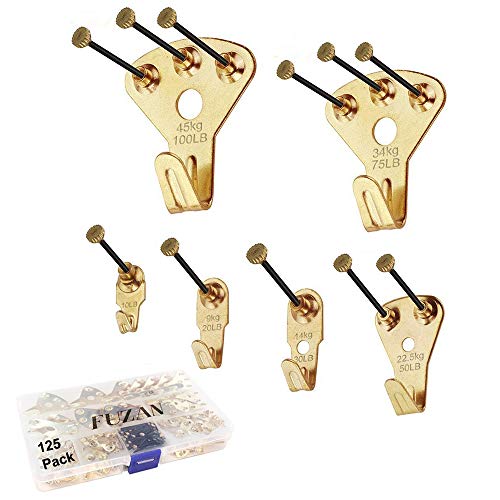
Helpful pick
125 Pcs Heavy Duty Picture Hanging Kit With Nails for Wooden/Drywall – Professional Hangers for Canvas, Office Pictures, Clock, House Decoration – Holds 10-100 lbs
A comprehensive set of professional-grade hangers ensures you have the right weight-rated hardware for secure, multi-point mounting on your plaster walls.
Mistakes That Make Plaster Mirror Mounts Fail
Relying on plaster alone is the most serious mistake. If a fastener only bites into plaster without reaching a stud or using a true behind-wall retention anchor, the mirror can loosen and crack the wall.
Using a drywall anchor without checking plaster compatibility can also cause trouble. Anchors designed for drywall do not all behave the same way in plaster. Some need a hollow cavity, some need solid backing, and some require a tight hole that will not exist after oversized drilling.
Spacing mounting points widely without a rail increases rocking, especially with a tall mirror. That movement turns the fasteners into pry points and can chip the plaster even when the installation initially feels tight.
Skipping pilot holes makes it easier to chip the wall or drill an oversized opening. If the plaster starts cracking during drilling, stop and change the location or installation method.
Over-tightening the fasteners can crush plaster around the hole. Tighten until the hardware is firmly engaged, not until the fastener stops turning. Then reassess the wall and mount.
A Practical Installation Workflow
Make a template before drilling. The template can show the cleat position, mounting holes, mirror edges, and nearby obstacles, which reduces the chance of misaligned holes.
Place the mirror temporarily on foam blocks or another support to verify the height and level. Check that it sits flat and remove the temporary support only after the hardware is secure.
A second person should handle large mirrors. One person can guide the mirror while the other checks the connections. This prevents the mirror from swinging and placing sudden side load on partly installed hardware.

Helpful pick
Uniclife 152 Pcs Heavy Duty Picture Hanging Kit, Picture Hanging Hooks,Gold
Keep this extensive collection of heavy-duty hooks on hand to ensure every mounting point of your mirror is supported by reliable, durable hardware.
FAQ
Can I hang a heavy mirror on plaster with only wall anchors?
Yes, provided the anchors are specifically rated for the mirror’s weight and the installation conditions. For very heavy mirrors, use a rail or French cleat to limit rocking.
What is the safest way to mount a heavy mirror on plaster?
The safest method depends on the wall structure, hardware rating, and mirror weight. Verify each connection and use temporary support during installation.
How long does it take to hang a mirror correctly?
Plan for 1 to 3 hours the first time. That includes finding studs, marking the height, drilling, and dry-fitting the mount. Plaster damage, repositioning, or re-drilling can add time. Rushing increases the chance of cracking the wall or misaligning the cleat.
Do I need help lifting a large mirror?
Yes. Large mirrors are awkward even when their weight seems manageable. A second person can hold the mirror during alignment and prevent side load on the anchors before the mount is fully secured.
What is the most common mistake?
The most common mistake is failing to account for the wall structure and the mirror’s weight. The installation may feel tight at first, then loosen or crack the wall under constant weight and small daily bumps.