

Technically, you can put a king duvet in a queen cover, but it often leads to a bulky, lumpy mess. While some people enjoy the extra puffiness, most find that the mismatch creates frustration when trying to make the bed.
We have all been there. You are redecorating your bedroom, moving into a new apartment, or simply trying to make use of the bedding you already own. You find yourself holding a plush king-sized duvet in one hand and a beautiful, high-quality queen duvet cover in the other. You pause and ask the golden question: can you put a king duvet in a queen cover?
It sounds like a simple enough task. After all, it is just a blanket inside a fabric shell, right? While it is physically possible to stuff a larger insert into a smaller casing, the results are rarely as elegant as they look in home decor magazines. In this guide, we will walk you through the realities of mismatching your bedding sizes and help you decide if it is a shortcut worth taking.
Key Takeaways
- Size Discrepancy: A king duvet is typically wider than a queen cover, meaning it will not lay flat.
- The “Extra Fluff” Factor: Some sleepers prefer the oversized look, but it can make the duvet feel heavy or uneven.
- Functional Issues: Shifting, bunching, and difficulty closing the buttons or zippers are common problems.
- Measurement Matters: Always measure your specific duvet and cover inserts, as sizes vary by brand.
- Sewing Solutions: You can alter a cover, but it is often more cost-effective to buy the right size.
- Aesthetic Trade-offs: Oversized duvets often look messy rather than “hotel-style” if the cover is too small.
The Physics of Bedding Mismatch
When we look at standard bedding dimensions in 2026, the gap between queen and king sizes is significant. A standard queen duvet is typically around 90 by 90 inches. In contrast, a king duvet usually measures about 102 by 90 inches or even 108 by 96 inches. That is a lot of extra fabric to force into a smaller space.
Understanding the “Stuffing” Effect
When you put a king duvet in a queen cover, you are essentially trying to put ten pounds of material into a five-pound bag. The primary issue is the sheer volume. Because the duvet insert is wider than the cover, it cannot spread out evenly. Instead, it bunches up against the sides of the cover. This often leads to “dead zones” where the cover is flat, and “lump zones” where the duvet is folded over itself.
The Problem with Shifting
Duvet covers are designed to keep your insert centered. If the insert is too large, it creates constant pressure on the internal ties or corners. Over time, the constant shifting as you sleep will cause the duvet to fold inside the cover. You will likely spend your mornings shaking and pulling at the cover just to get the corners to align properly. If you are a light sleeper, this shifting can be an annoying disruption to your nightly routine.
Can You Make It Work? Practical Tips
If you are determined to make this setup work, you do not have to give up immediately. Some people actually enjoy the extra loft that a king duvet provides inside a queen cover. It creates a very thick, heavy, and ultra-cozy appearance that feels like sleeping under a cloud – if you can manage the bunching.
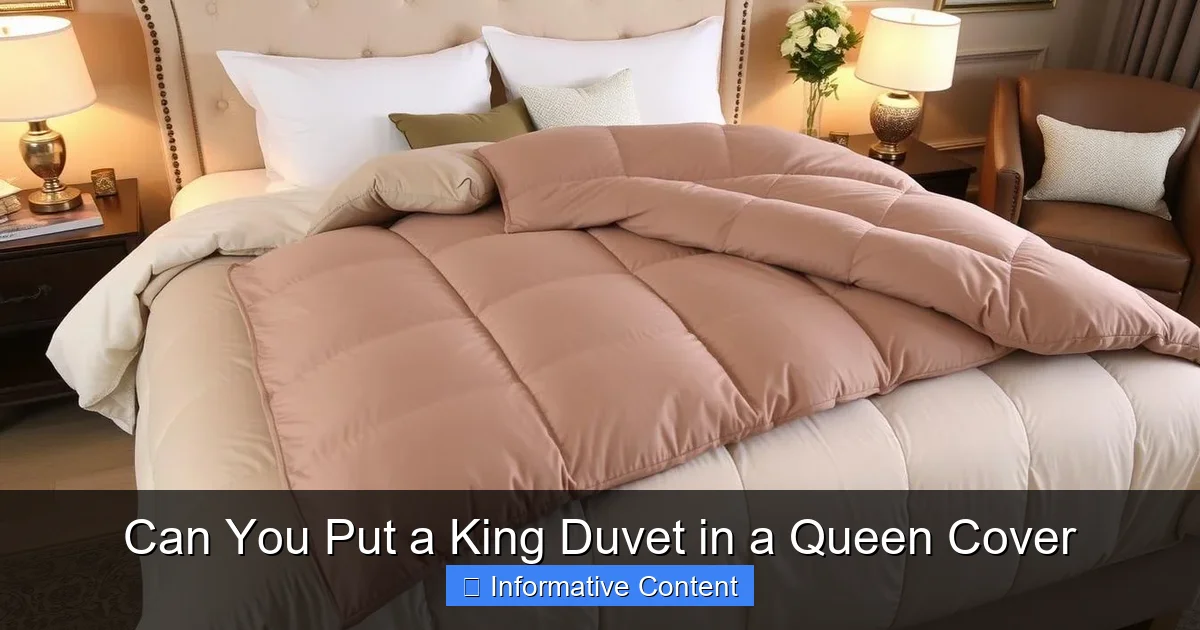
Visual guide about Can You Put a King Duvet in a Queen Cover
Image source: coveradvice.com
Choosing the Right Material
If you are going to use a king duvet in a queen cover, the type of duvet insert matters immensely. A thin, down-alternative blanket will be much easier to manipulate than a thick, high-fill-power down duvet. The lighter the insert, the less likely it is to feel lumpy when folded. Avoid heavy, stiff materials that resist bending, as these will highlight the size difference much more drastically.
The Corner Tie Trick
Most modern covers come with ties inside the corners to keep the duvet in place. If your king duvet does not have loops that align with your queen cover’s ties, you can create them. Use simple fabric ribbons or even safety pins (though be careful!) to bridge the gap. Keeping those corners anchored is the only way to prevent your duvet from becoming a giant, twisted ball inside your cover by morning.
The Aesthetic Trade-Offs
In 2026, bedroom aesthetics are all about the “relaxed luxury” look. Some designers actually suggest using a slightly larger insert to create a fuller, more inviting bed profile. However, there is a fine line between “luxuriously full” and “messy and poorly fitted.”
Visual Clutter vs. Comfort
A duvet that is too large for its cover often prevents the edges from draping gracefully over the side of the bed. Instead of a clean, waterfall edge, you may end up with a stiff, boxy look. If your queen cover has a decorative border or a specific pattern, the internal pressure from the king duvet can distort the fabric, making the design look stretched or crooked.
The “Hotel Look” Challenge
We all love the crisp, sharp look of a hotel bed. That aesthetic relies on precision. When everything fits perfectly, the bed looks tailored. When you put a king duvet in a queen cover, you lose that sharp, tailored finish. If you prioritize a neat, minimalist bedroom, this mismatch will likely bother you every single time you walk into the room.
When Should You Just Buy New Bedding?
Sometimes, the frustration of a mismatched duvet isn’t worth the cost savings. If you find yourself fighting with your bed every morning, it is time to reconsider your setup. Life is stressful enough without having to wrestle with a blanket that refuses to stay flat.
Budgeting for Better Sleep
Bedding is an investment in your well-being. If you are trying to stretch a king duvet to fit a queen cover because of a budget constraint, consider searching for high-quality, pre-loved covers or waiting for seasonal sales. A properly sized cover will last for years and provide a much higher quality of rest.
Donating and Repurposing
If you have an extra king duvet that you just cannot make fit, consider keeping it for a guest room that actually has a king bed. Alternatively, you could look into professional tailoring services. Sometimes, a local seamstress can resize a duvet cover for a fraction of the cost of buying a brand-new, high-end set, especially if you have a favorite cover you are emotionally attached to.
Pros and Cons at a Glance
To help you decide, here is a quick breakdown of the trade-offs involved in this bedding hack.
The Pros
- Extra Loft: You get a super-plush, thick feeling that some find comforting.
- Warmer Sleep: Extra density can result in better insulation during the colder winter months.
- Resourcefulness: You avoid throwing away an expensive duvet that is technically still in good condition.
The Cons
- Constant Maintenance: You will likely need to adjust the insert daily to keep it from bunching.
- Appearance: It is difficult to get a smooth, professional look.
- Pressure Points: The stress on the cover’s seams could lead to tears or broken zippers over time.
Conclusion
So, can you put a king duvet in a queen cover? Yes, you can. It is physically possible, and for some, the added warmth and loft are worth the extra effort of daily readjustment.
However, for most people, the mismatch creates more headaches than it is worth. The constant shifting, the inability to get that smooth, crisp look, and the potential for premature wear and tear on your duvet cover are significant downsides.
If you value a low-maintenance morning routine and a clean, sharp aesthetic, it is better to stick with properly sized bedding. Your sleep environment should be a place of calm, not a source of daily frustration. By matching your sizes, you ensure that your bedroom remains the cozy, restful sanctuary you deserve in 2026 and beyond.
Frequently Asked Questions
Is it bad for the duvet to be bunched up inside?
While not “bad” in terms of hygiene, it can cause the filling especially down or feathers to compress unevenly over time. This might lead to permanent lumps or areas where the insulation is thinner than others.
Can I sew my cover to fit better?
Yes, you can take in the sides of a duvet cover if you are handy with a sewing machine. However, be mindful that you will need to adjust the zipper or button closure as well to maintain the original look.
Will the buttons or zipper break if I overstuff the cover?
It is possible. The tension created by a larger insert puts significant stress on the closure mechanism, which can lead to zippers jamming or buttons popping off under the constant pressure.
Are there brands that offer “oversized” queen duvets?
Yes, many modern bedding companies now offer “oversized queen” options specifically designed for high-profile mattresses. Checking these out might be a better solution than forcing a king duvet into a standard cover.
Does the weight of a king duvet affect the queen cover fabric?
Yes, the extra weight can stretch the fabric of the cover over time, especially if the cover is made from a lightweight material like linen or thin cotton. This stretching can make the cover look worn and lose its original shape.
How do I know what size my duvet actually is?
Always check the care label on the duvet itself. If the label is worn off, use a tape measure to get the exact width and length, as manufacturers vary widely in their definition of “standard” sizes.