

Choosing between a duvet cover and a comforter depends on your lifestyle, cleaning preferences, and desire for bedroom flexibility. While comforters offer a simple, all-in-one solution for cozy sleep, duvet covers provide unmatched versatility and easier maintenance for busy modern homes.
Walking into a bedding store in 2026 can feel a bit overwhelming. You see rows of soft, fluffy piles and wonder: are duvet covers better than comforters? It is a question that has puzzled homeowners for decades. Both options promise a cozy night of sleep, but they function in very different ways. Understanding these differences is the secret to a bedroom that feels like a five-star hotel.
Think of your bed as the heart of your home. It is where you recharge, watch movies, and escape the stress of a long day. Because you spend nearly a third of your life in bed, making the right choice between a duvet cover and a comforter is essential. This guide breaks down everything you need to know to make an informed decision for your space.
Key Takeaways
- Ease of Cleaning: Duvet covers are machine washable and easy to swap, whereas comforters often require professional dry cleaning or industrial-sized machines.
- Customizable Comfort: Duvets allow you to change the warmth level by swapping out the inner insert, making them ideal for changing seasons.
- Design Flexibility: A duvet cover acts as a stylish shell, allowing you to update your bedroom decor instantly without buying a new bulky item.
- Convenience Factor: Comforters are ready to use right out of the packaging and don’t require the assembly process of stuffing an insert into a cover.
- Longevity: Comforters tend to wear out faster due to repeated washing, while duvet covers protect the insert, extending the life of your bedding investment.
- Budget Considerations: Comforters are generally cheaper upfront, but duvet covers often save money in the long run by protecting your high-quality inserts.
Understanding the Basics: What is the Difference?
Before we dive into the debate of are duvet covers better than comforters, we need to define our terms. Many people use these words interchangeably, but they are actually distinct products. Knowing the difference helps you shop with confidence.
The Anatomy of a Comforter
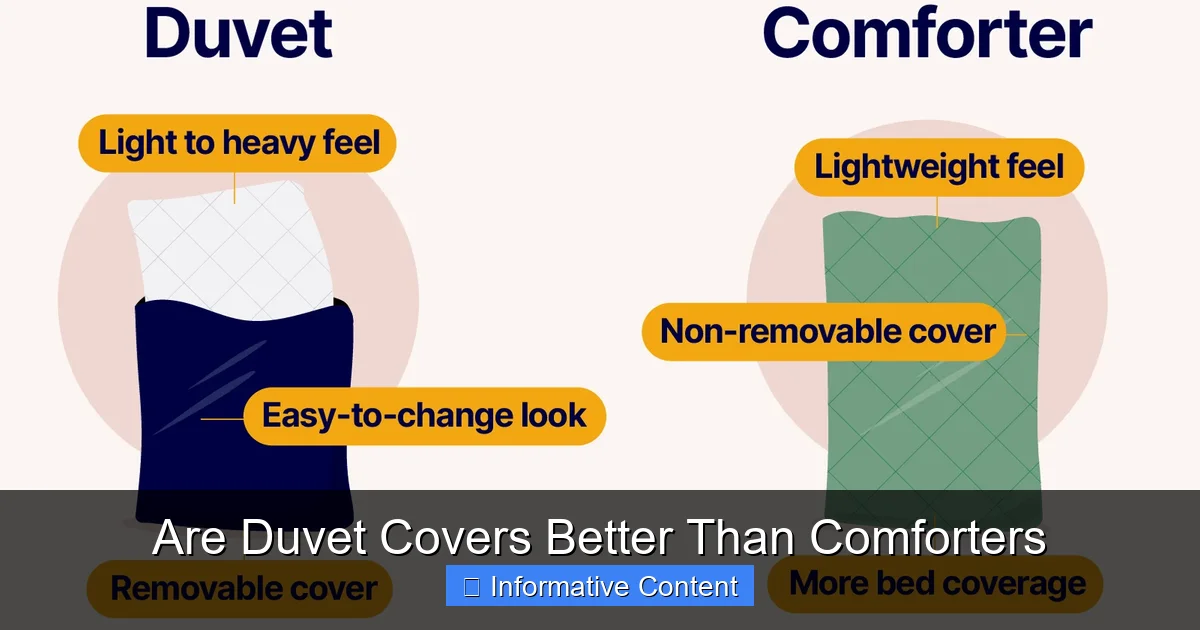
A comforter is a single piece of bedding. It is a thick, quilted blanket filled with materials like down, feathers, or synthetic fibers. The filling is sewn into place so it stays evenly distributed. Because it is a finished product, you simply throw it on your bed, and you are done. It is the definition of “plug and play” bedding.
The Structure of a Duvet and Cover
A duvet is a two-part system. You have the duvet insert, which is essentially a plain white bag filled with insulating material, and the duvet cover. The cover acts like a giant pillowcase for your bed. You slide the insert inside, button or zip it shut, and you have a finished look. This system is popular in Europe and has become the gold standard for design-focused homes in 2026.
Why Duvet Covers Often Win the Convenience Battle?
If you ask interior designers if are duvet covers better than comforters, most will point to the convenience of the cover system. When you live a busy life, cleaning should not be a chore that ruins your weekend. This is where the duvet cover shines.
Visual guide about Are Duvet Covers Better Than Comforters
Image source: mattressreviews.ca
Effortless Maintenance
Let’s talk about laundry. A standard king-sized comforter is massive. It rarely fits in a home washing machine, and trying to stuff one into a small machine can actually break the agitator or lead to an uneven clean. With a duvet cover, you simply pull it off the insert, wash it, dry it, and put it back on. It is as easy as changing your bed sheets.
Protection for Your Investment
High-quality down inserts can be expensive. A duvet cover acts as a protective layer, keeping sweat, dust, and oils from reaching the inner fluff. By keeping the insert clean, you preserve its loft and warmth for years. If you use a comforter, the entire item is exposed to everything. Once a comforter gets stained or dusty, you have to wash the whole thing, which breaks down the filling over time.
Design and Aesthetic Flexibility
One of the biggest trends in 2026 is the “seasonal refresh.” People want their bedrooms to look different during the summer than they do in the winter. Duvet covers make this incredibly easy and affordable.
Updating Your Decor on a Budget
Imagine you want to switch from a light linen look for summer to a dark, moody velvet for winter. If you have a comforter, you would have to buy two entirely new, bulky bedding pieces. That takes up a lot of closet space. With a duvet cover, you keep the same warm insert year-round and simply swap the cover. You can store your extra covers in a small drawer, keeping your closet organized and clutter-free.
Styling Tips for the Perfect Look
Duvet covers are the secret weapon for that “fluffy” look you see on social media. If you find your bed looks a bit flat, you can try “double-stuffing” your cover with two thin inserts, or opting for a high-loft down alternative. Because the cover keeps the fill contained, you can experiment with textures and patterns that wouldn’t be possible with standard quilted comforters.
The Case for the Simple Comforter
While we lean toward the benefits of covers, we have to address the question: are duvet covers better than comforters for everyone? Not necessarily. Comforters still have a loyal fan base for very good reasons.
Ready-Made Simplicity
If you hate the process of “stuffing” a duvet, a comforter is your best friend. Many people find that wrestling a heavy insert into a duvet cover is a workout they didn’t ask for. With a comforter, the corners never shift, the filling never clumps in one side, and you never have to deal with buttons or zippers. It is perfect for children’s rooms or guest beds where you want low-maintenance bedding.
Affordability and Variety
Comforters are often much cheaper than buying a high-quality insert and a separate cover. If you are setting up a first apartment or a dorm room, a comforter set provides a cohesive look without the extra step of finding a matching insert. They are widely available in every style imaginable, from simple geometric prints to bold florals.
Factors to Consider Before You Buy
To decide if are duvet covers better than comforters for your personal needs, you should look at your lifestyle. Here are three key factors to keep in mind.
Your Laundry Situation
Do you have access to a large-capacity washer and dryer? If you live in an apartment building with small machines, a comforter will be a nightmare to maintain. You will likely end up at the laundromat every month. In this case, a duvet cover is almost certainly the “better” choice.
Your Sensitivity to Allergies
If you suffer from allergies, keeping your bedding clean is non-negotiable. Duvet covers are easier to wash frequently, which helps keep dust mites at bay. Plus, many modern duvet covers in 2026 are made from hypoallergenic bamboo or organic cotton, which can significantly improve your sleep quality compared to synthetic comforter fills.
The “Shift” Factor
One common complaint about duvets is the “lumping” issue. If the insert isn’t tied properly to the corners of the cover, it will slide down to the bottom. If you are a restless sleeper, you might find this annoying. If you choose a duvet, look for one with internal corner ties and a high-quality duvet cover that features the same. If you move around a lot in your sleep, a quilted comforter might feel more stable.
Final Thoughts: Which One is Right for You?
So, are duvet covers better than comforters? If you value versatility, easy maintenance, and the ability to change your room’s look on a whim, the duvet cover is the clear winner. It protects your bedding, keeps your bedroom decor fresh, and makes laundry day feel less like a chore.
However, if you are looking for pure simplicity and want your bed to be ready to go the moment you bring it home, a comforter remains a fantastic, reliable choice. There is no right or wrong answer, only what works best for your home. Whatever you choose, remember that the most important part of your bedding is how it makes you feel when you finally curl up at the end of the day. Sweet dreams!
Frequently Asked Questions
Do duvet covers always come with the insert?
No, a duvet cover is typically sold as a separate item from the insert. You will need to purchase the insert, which is the fluffy part, separately unless you are buying a specific bedding set.
How do I keep my duvet insert from shifting inside the cover?
Most modern duvet covers and inserts feature corner ties or loops. Secure these ties tightly before closing the cover to ensure the insert stays perfectly in place all night.
Are comforters warmer than duvets?
Not necessarily, as warmth depends on the fill weight and material rather than the style. You can find both lightweight and heavy-duty versions of both comforters and duvet inserts.
How often should I wash my duvet cover?
For optimal hygiene, you should wash your duvet cover once every one to two weeks, just like your bed sheets. Because it touches your skin, it picks up body oils and dead skin cells.
Can I use a duvet cover on my existing comforter?
Yes, many people use their old comforters as an insert for a new duvet cover. This is a great way to update the look of your bed without getting rid of a perfectly good blanket.
Is it harder to make a bed with a duvet cover?
It can be slightly more time-consuming to put a duvet cover on than to lay out a comforter. However, once the cover is on, making your bed in the morning takes the same amount of time as a standard blanket.