

No, your duvet cover should not be smaller than your insert. Ideally, the cover should be the same size or slightly larger than your duvet insert to ensure it lays flat, looks full, and avoids bunching. If the cover is too small, your insert will become misshapen, lumpy, and uncomfortable to use.
We have all been there. You buy a brand-new, fluffy duvet insert, pick out the perfect duvet cover to match your bedroom decor, and then the struggle begins. You try to stuff the insert inside, wrestle with the corners, and realize that things just aren’t sitting right.
One of the most common questions we hear in 2026 is: should duvet cover be smaller than insert? It is a frustration that can turn a relaxing bedroom retreat into a tangled mess of fabric. Getting the fit right is the secret to a well-made bed.
If the sizes are mismatched, you might end up with a duvet that looks like a lumpy sack or, conversely, a cover that has too much extra fabric hanging off the sides. In this guide, we will break down exactly how to size your bedding so you can stop fighting with your blankets and start enjoying a restful night of sleep.
Key Takeaways
- The Golden Rule: Always match your duvet cover dimensions to your insert dimensions for a clean, professional aesthetic.
- Avoid the Bunching Effect: A cover that is smaller than the insert causes internal shifting, creating uncomfortable lumps and bumps.
- Size Variability: Some high-end brands intentionally make covers slightly larger to account for fabric shrinkage after washing.
- The “Full” Look: If you want a plush, boutique hotel appearance, ensure your insert has a high fill power that matches the internal volume of the cover.
- Measuring Matters: Always measure your insert from seam to seam rather than relying solely on the label, as sizing standards can vary by manufacturer.
- Fastener Importance: Whether you use buttons, ties, or zippers, ensure they are securely fastened to prevent the insert from sliding inside the cover.
The Physics of a Perfect Fit
When asking if a duvet cover should be smaller than an insert, the answer is a firm no. In fact, think of your duvet cover as a tailored garment for your bed. Just as you wouldn’t wear a shirt that is two sizes too small, your bedding needs room to breathe. When you force a large insert into a small cover, you restrict the loft of the fill, which ultimately ruins the insulating properties of your duvet.
Why Size Parity Matters
A duvet insert relies on loft—the air trapped between the feathers or synthetic fibers to keep you warm. If the cover is smaller than the insert, that loft is compressed. You lose the “cloud-like” feel that makes a duvet so inviting. Furthermore, a tight cover pulls the corners of the insert inward, causing the edges to bunch up and create awkward gaps where your body heat can escape.
The Problem with Compression
Compression is the enemy of comfort. When the insert is forced into a smaller space, the filling cannot distribute evenly. This leads to cold spots in the middle of the night. If you notice your duvet looks lumpy or has deep ridges, it is almost certainly because the duvet cover is smaller than the insert. Aim for a perfect one-to-one ratio for the best results.
Understanding Standard Bedding Sizes
In 2026, while we have many global standards, bedding manufacturers can still be a bit tricky. A “Queen” size in one brand might be two inches wider than a “Queen” size in another. This variance is exactly why you need to go beyond the label and use a measuring tape.
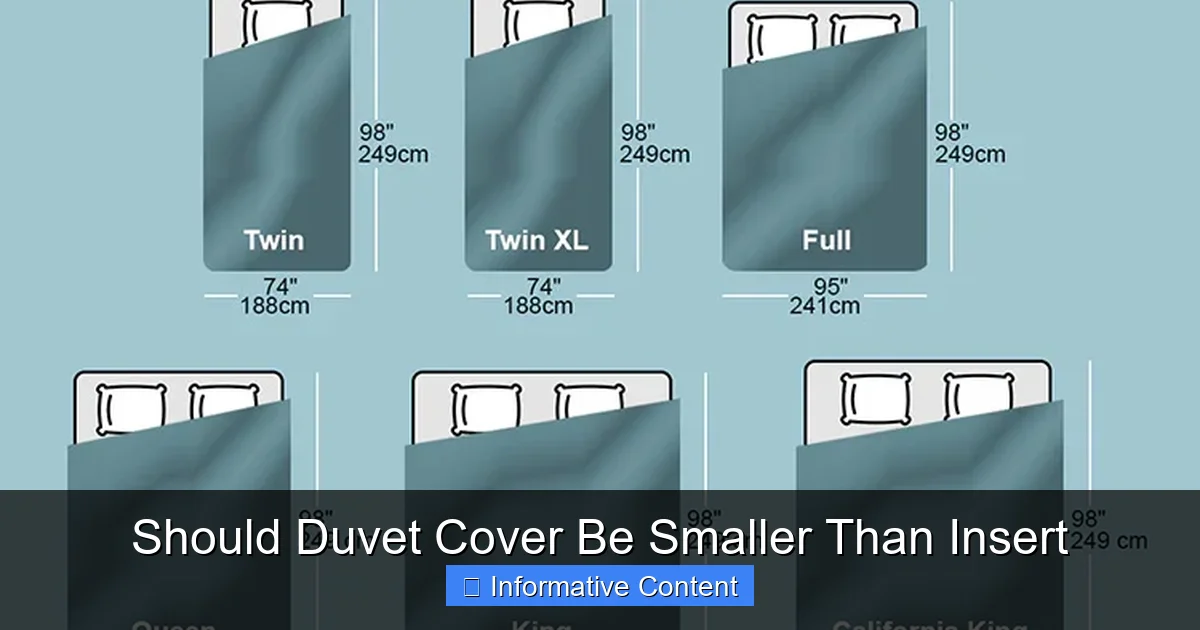
Visual guide about Should Duvet Cover Be Smaller Than Insert
Image source: cdn.shopify.com
Measuring Your Insert Correctly
Before you purchase your next cover, lay your insert flat on the floor or the bed. Use a tape measure to get the exact width and length from edge to edge. Don’t pull the fabric tight—just lay it flat. Write these numbers down. When shopping, look for a cover that matches these dimensions within an inch or two. If you find a cover that is slightly larger, that is usually manageable; if it is smaller, keep looking.
Manufacturing Variances
Some premium bedding brands intentionally cut their duvet covers one or two inches larger than the insert size. This is a design choice meant to account for natural fabric shrinkage during the first few laundry cycles. If you buy 100% cotton or linen, expect a tiny amount of shrinkage. Starting with a cover that is slightly larger—not smaller—is a smart way to future-proof your bedding.
The Aesthetic Impact: Professional Styling
Have you ever walked into a hotel room and wondered why their bed looks so much fuller and more inviting than yours? Part of it is the quality of the insert, but a huge part of it is the fit. A duvet cover that fits perfectly neither too small nor too large creates a sleek, clean line that makes the entire room feel more organized and calm.
Avoiding the Empty Edge Look
If you make the mistake of buying a cover that is too large, you will end up with excess fabric at the sides. This “empty edge” look is frustrating because the insert will constantly slide around, leaving you with a strip of flat, empty fabric at the top or side of your bed.
This is why people sometimes wonder if a smaller cover is better. They want to avoid the “baggy” look. However, the solution isn’t to go smaller; it is to use a high-quality insert that is properly sized for the cover.
Securing the Insert
To keep the fit looking professional, always utilize the internal ties or loops. Most modern duvet covers come with small fabric ties in the corners. If your insert has loops, tie them securely. This prevents the insert from bunching up even if the cover is the perfect size. If your insert doesn’t have loops, consider using duvet clips or corner fasteners to keep the fabric in place.
Choosing the Right Materials
The material of your duvet cover plays a role in how it behaves with your insert. Heavier materials like thick linen or brushed cotton have different draping qualities than lightweight percale or silk. When you are asking should duvet cover be smaller than insert, consider how the fabric will move.
Natural Fibers and Shrinkage
Linen and cotton are breathable and wonderful, but they are prone to shrinking. If you purchase a high-quality linen duvet cover, it is often a good practice to buy one that is slightly larger than your insert.
As you wash the cover, the natural fibers will tighten, and over time, the fit will become perfect. If you start with a cover that is exactly the same size as your insert and it shrinks, you will suddenly be dealing with a cover that is too small.
Synthetic Blends
Synthetic blends, such as polyester or microfiber, generally hold their shape very well. These fabrics do not shrink significantly in the wash. Therefore, you can be much more precise when buying these covers. Find the exact dimensions of your insert, and look for a cover that matches those dimensions exactly. Because these materials are stable, you won’t have to worry about the fit changing over time.
Troubleshooting Common Fitting Issues
If you are already stuck with a duvet cover that is smaller than your insert, don’t panic. You don’t necessarily have to throw it away. There are several ways to make it work or to modify your current setup so that you aren’t uncomfortable at night.
Ways to Fix a Poor Fit
If your cover is only slightly too small, you can try “de-fluffing” your insert. Shake the insert out as much as possible before putting it in the cover. Sometimes, the issue isn’t the size of the cover, but the distribution of the down or fiberfill. Redistributing the fill toward the center can help it lie flatter, relieving pressure on the cover’s seams.
When to Replace
If the cover is significantly smaller, it might be time to accept that the two items are not compatible. Forcing an oversized insert into a small cover will put extreme tension on your zipper or buttons. This usually leads to a broken zipper or a popped button in a very short amount of time. If you see the fabric straining or the seams pulling, it is better to upgrade the cover to protect the longevity of your insert.
The 2026 Bedding Checklist
As we move through 2026, the trends in home decor are shifting toward simplicity and comfort. We are focusing less on overly complicated styling and more on high-quality basics. A properly fitted duvet is the cornerstone of this philosophy.
- Measure twice, buy once: Always use a physical tape measure on your insert.
- Check the manufacturer’s guide: Many sites now have a “fit guide” that explains their specific sizing tolerances.
- Consider the weight: A heavier insert needs a durable cover that won’t stretch under the weight.
- Check for closures: Zippers are generally better for keeping inserts in place than simple button closures.
- Read reviews: If other customers mention the cover runs small, take their advice and size up.
In conclusion, the answer to should duvet cover be smaller than insert is a clear no. Achieving a cozy, sleep-ready environment requires a balance between the cover and the insert. By selecting items that match in size and paying attention to the material’s tendency to shrink, you can create a bed that looks like it belongs in a luxury hotel. Don’t settle for lumpy, misshapen blankets. Take the time to measure, choose wisely, and enjoy the comfort you deserve.
Frequently Asked Questions
Why does my duvet insert bunch up inside the cover?
This usually happens because the duvet cover is either too large or lacks a way to secure the insert. Ensure your cover has ties or loops in the corners and that you are using them to keep the insert in place.
Can I shrink a duvet cover to fit my insert?
If your duvet cover is made of 100% natural cotton or linen, it may shrink in a hot wash and dry cycle. However, this is unpredictable and can cause damage to the fabric, so it is better to buy the correct size from the start.
What is the “loft” of an insert and how does it affect size?
Loft refers to the fluffiness or volume of the insert’s filling. A high-loft insert needs a cover that provides enough internal space; otherwise, the filling is compressed, and the insert loses its insulating warmth.
Should I measure the duvet cover or the insert first?
Always measure your insert first, as that is the permanent object you are trying to cover. Once you have the dimensions of your insert, look for a duvet cover that matches those numbers precisely.
Do all brands use the same dimensions for “Queen” or “King” sizes?
No, unfortunately, there is no universal standard for bedding dimensions across all manufacturers. Always check the specific inch or centimeter measurements provided by the brand before you commit to a purchase.
How can I make my duvet look more “fluffy”?
Ensure your duvet cover is the correct size so the insert isn’t compressed. Additionally, try shaking out your duvet every morning to redistribute the fill, which helps maintain its loft and keeps it looking full and inviting.